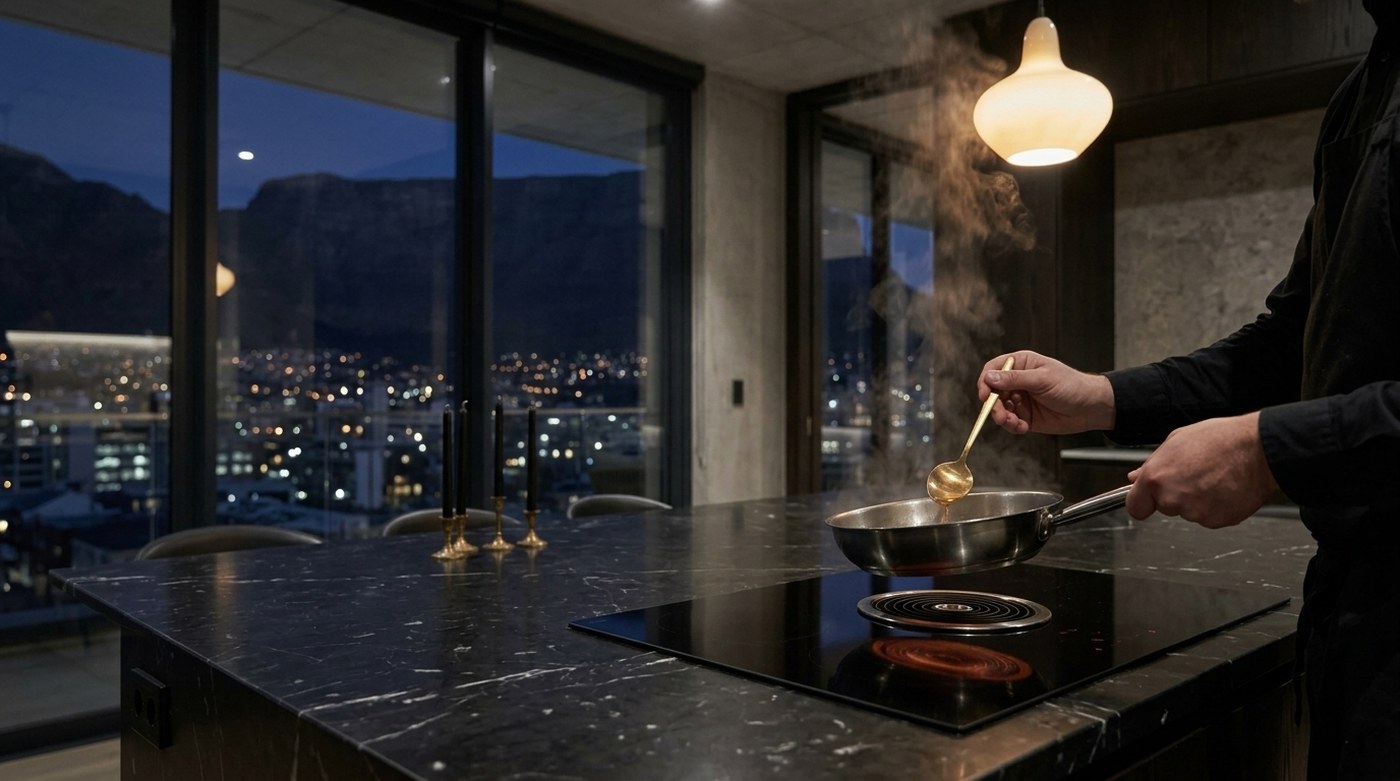
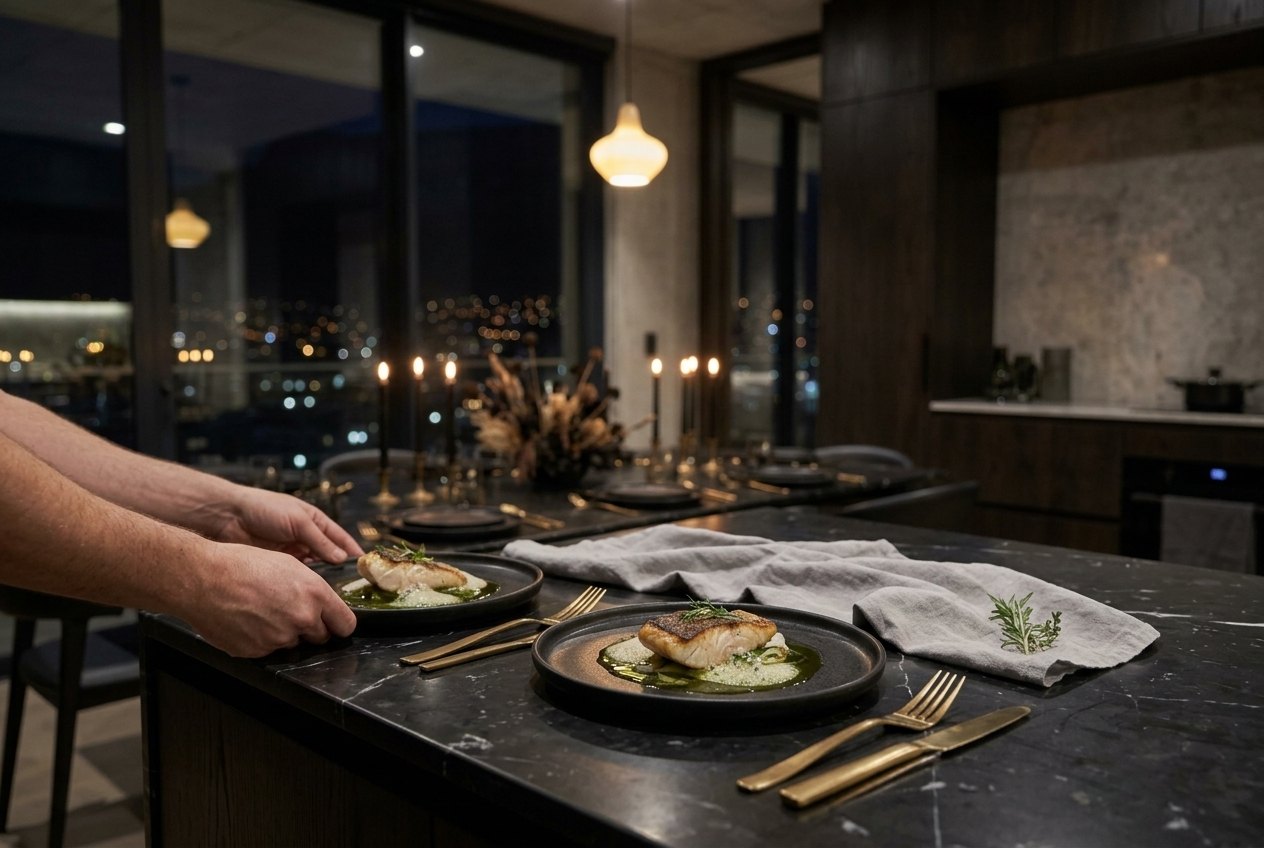
A chef cooks in your kitchen.
Up to forty-five people around your own table. We prep at our kitchen in Epping, arrive with everything, cook it in front of you, plate it, serve it, then wash up and go. You host. That is the whole job.
A division of The Velvet Effect. Chefs vetted by us, our kitchen, your table.
How it works
Four steps, and three of them are ours.
Nothing is left to the night. What happens in your kitchen was decided a week earlier.
Pick a date
Tell us the menu you like, how many are coming and what nobody at the table can eat. We check the date is free.
We set the menu
One menu for the table, written around your allergies and what your kitchen can actually cook. Then quoted properly, line by line.
We prep and bring it
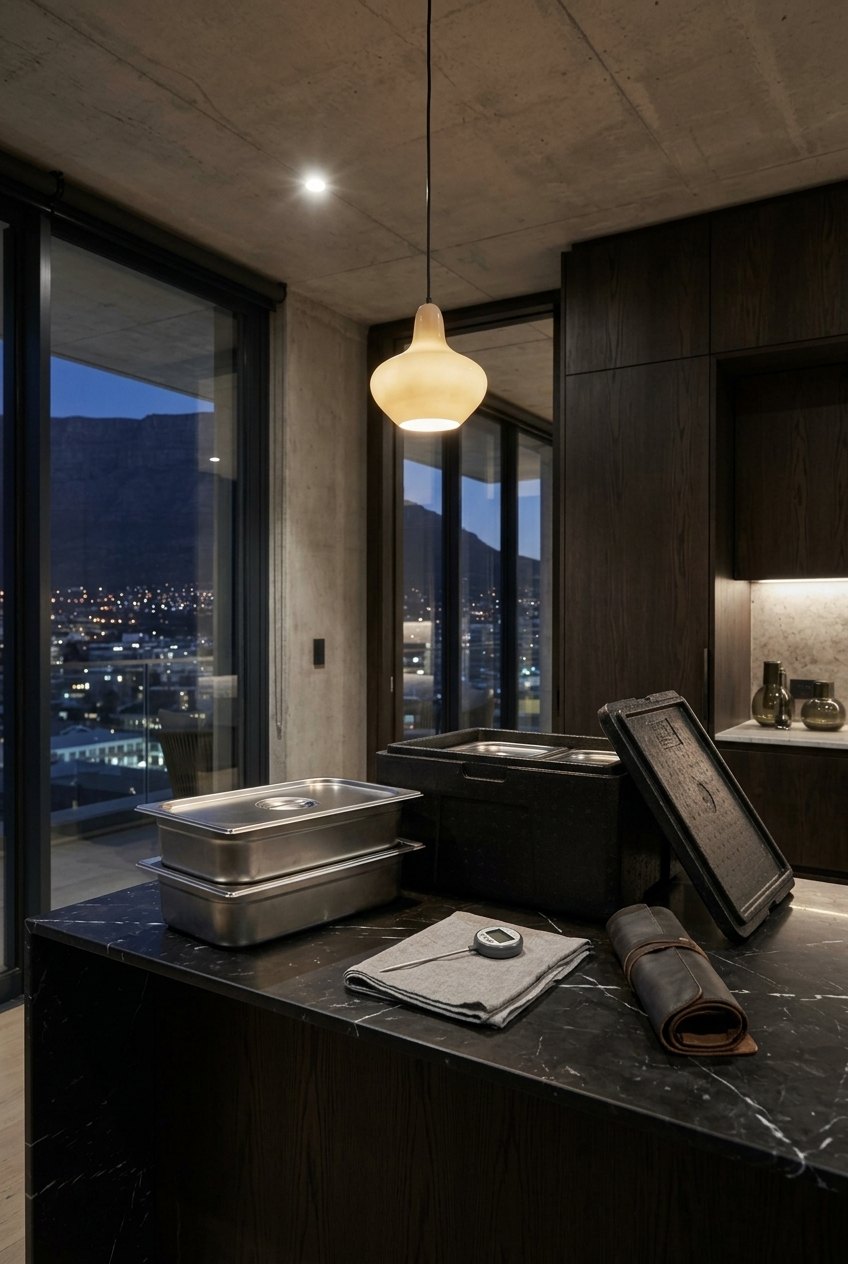
The heavy work happens at Epping. Every crate is temperature checked when it leaves us and again at your door.
Your chef cooks
Courses go out from your kitchen as they are ready. When the last plate is cleared the kitchen gets cleaned and we leave.
The menus
Seven menus and a chef in residence.
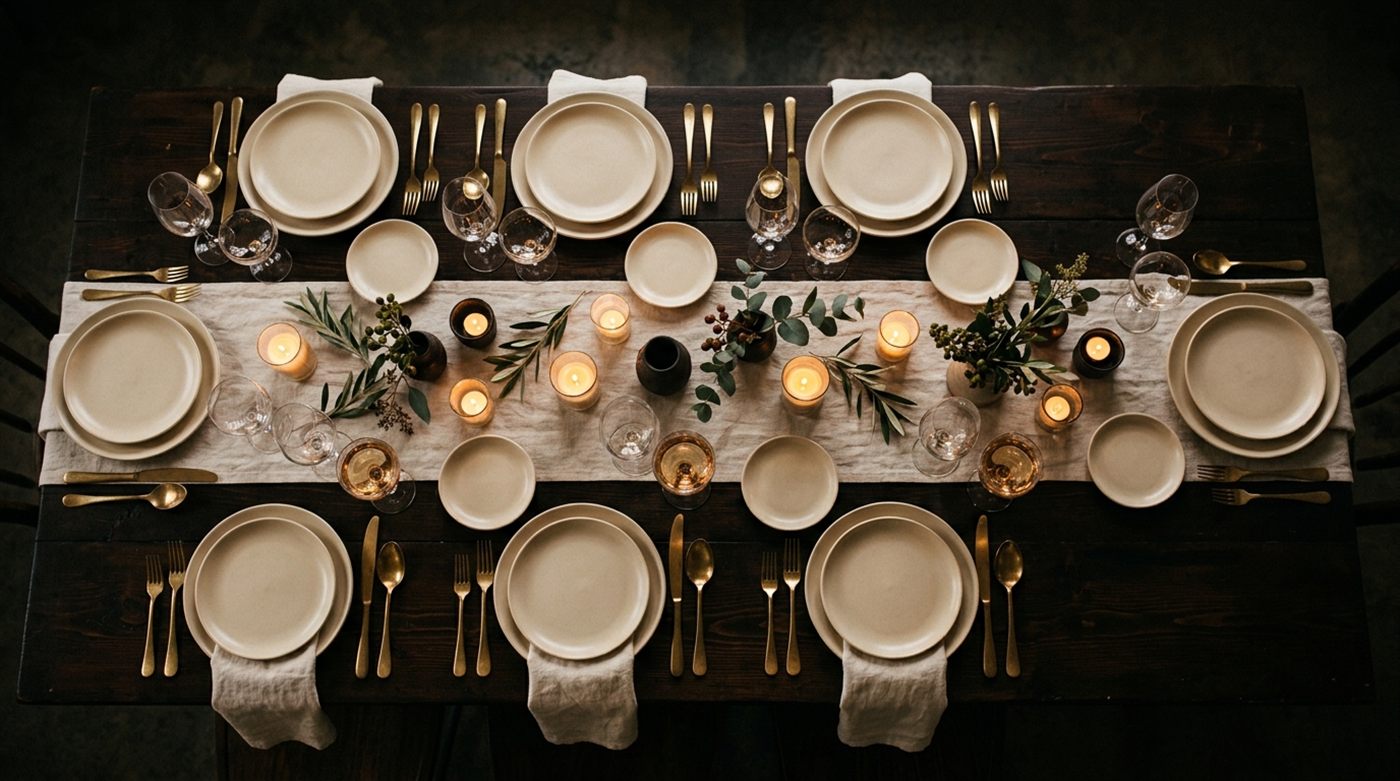
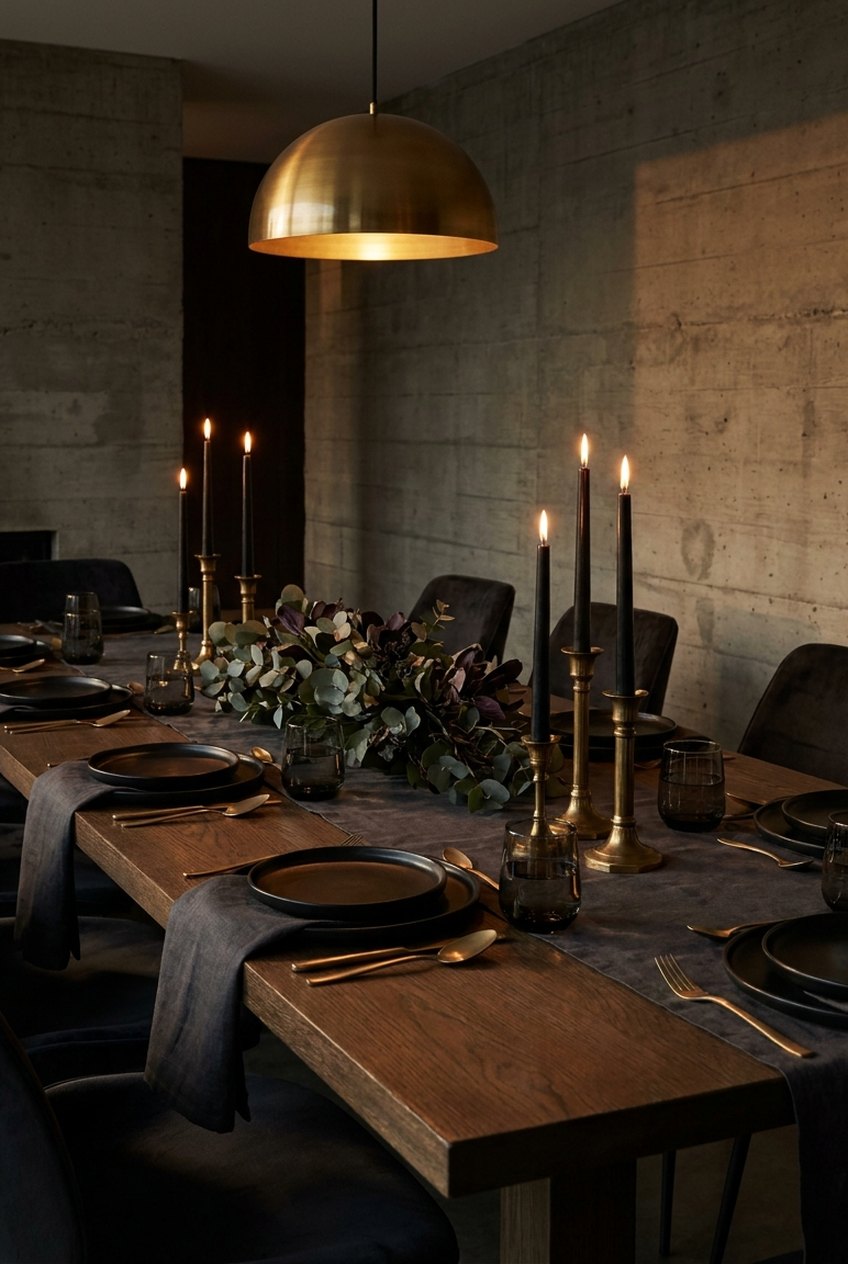
Five starters, five mains and five desserts on each — you choose one per course for your table. One menu, cooked properly, every plate out of a home kitchen hot and together. Vegetarians and vegans are served their own version of the same dishes, so nobody eats a different meal. Not sure what to pick? Send it half-done and we will shortlist with you.
South African
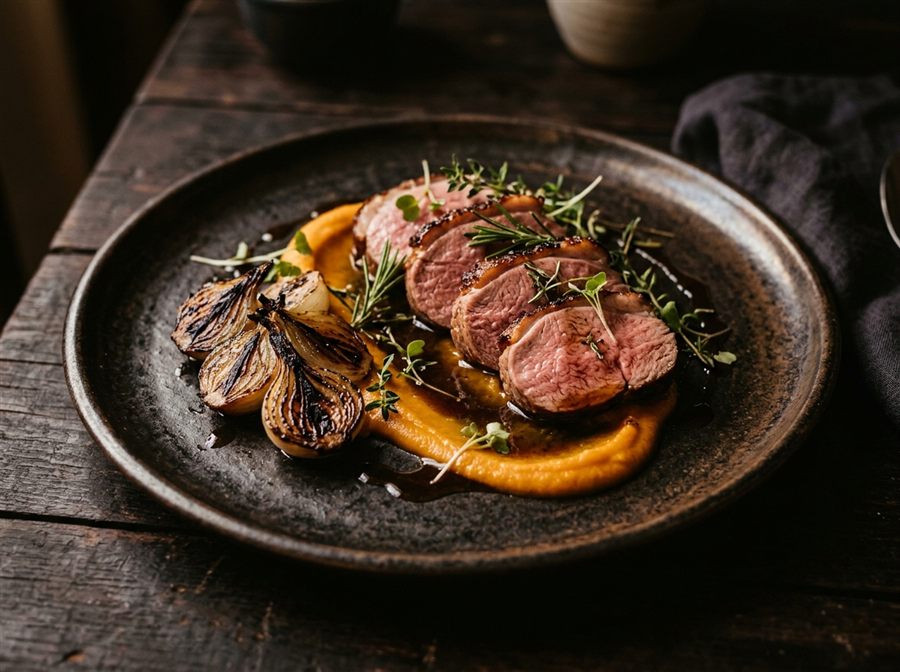
Cape Town's own cooking. Roasted spice, dried fruit and slow braises, off the Bo-Kaap kitchens that have been making this food for three hundred years.
Fine Dining
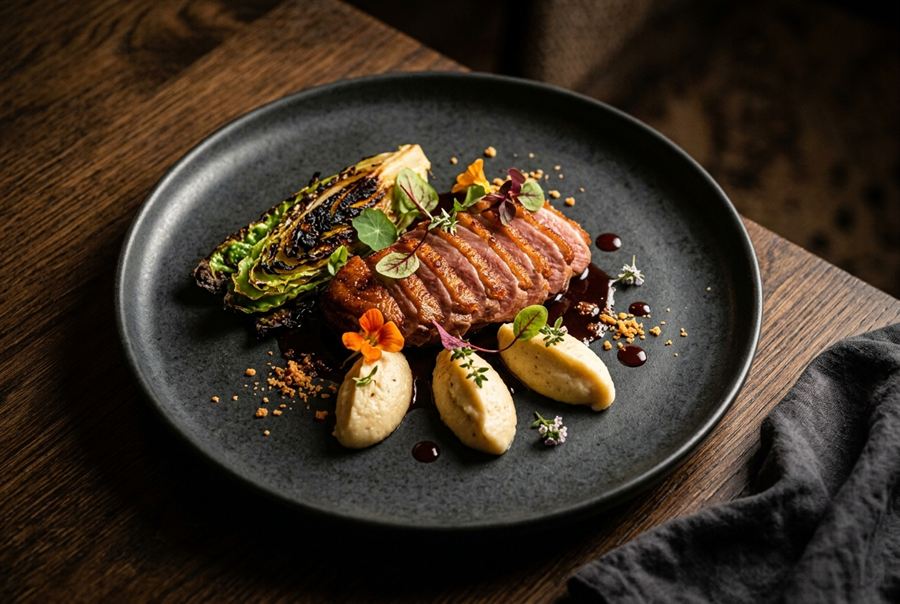
Classical technique on a modern plate. Proper sauce work, precision cookery and the best protein we can get hold of.
Coastal
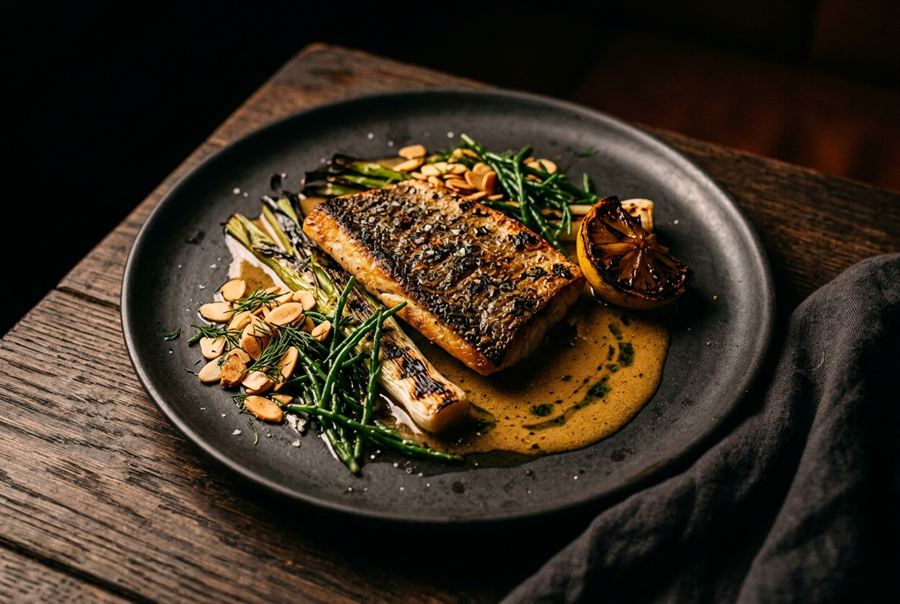
Line-caught and cooked simply. Fire, citrus and salt.
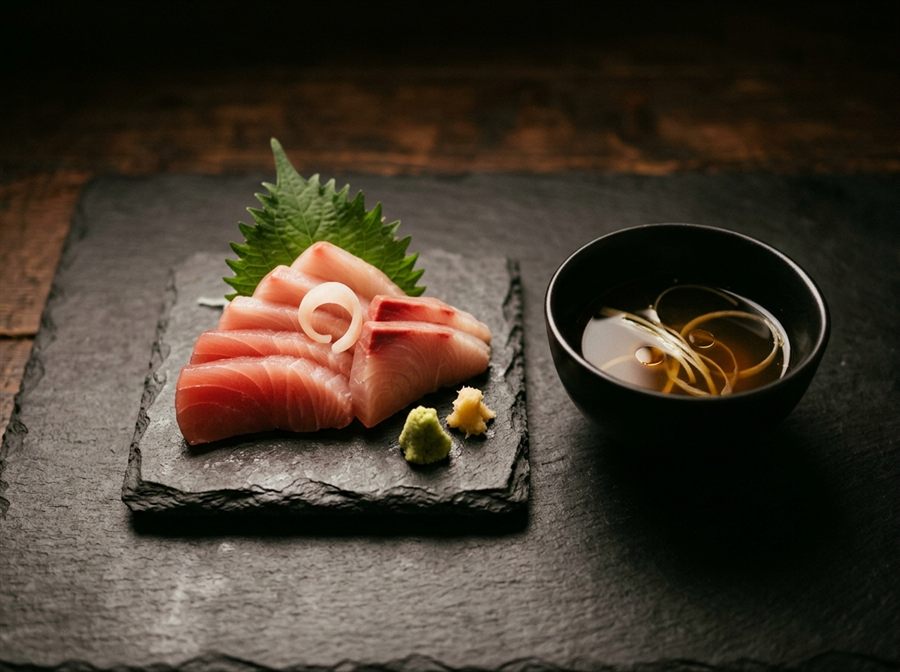
Japanese
Raw fish handled properly, clean dashi, sharp acidity and not much else on the plate. This one runs well in a home kitchen.
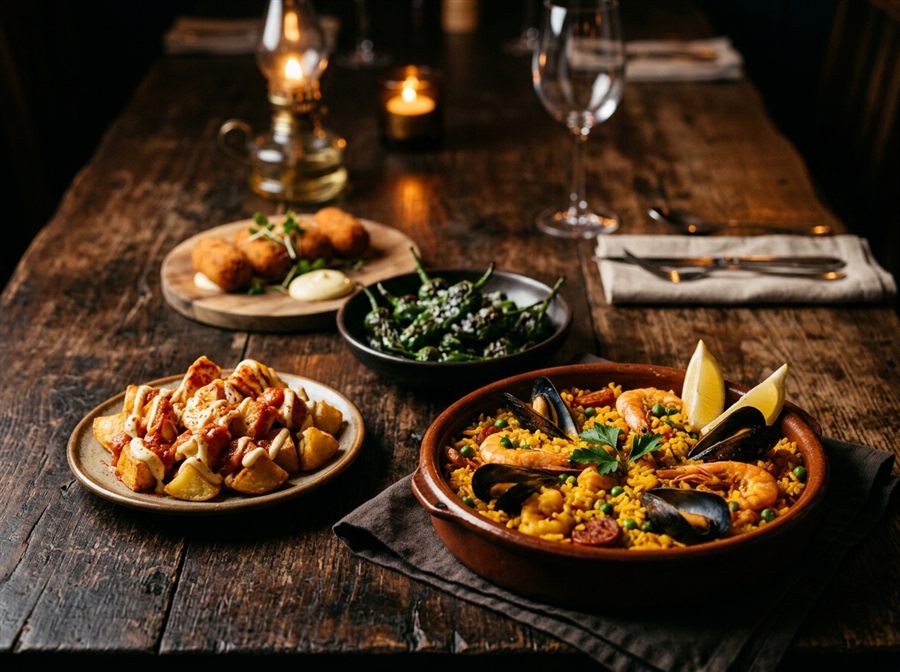
Tapas
Plates that keep arriving. Plancha, saffron and smoked paprika, put in the middle of the table for people to reach across.
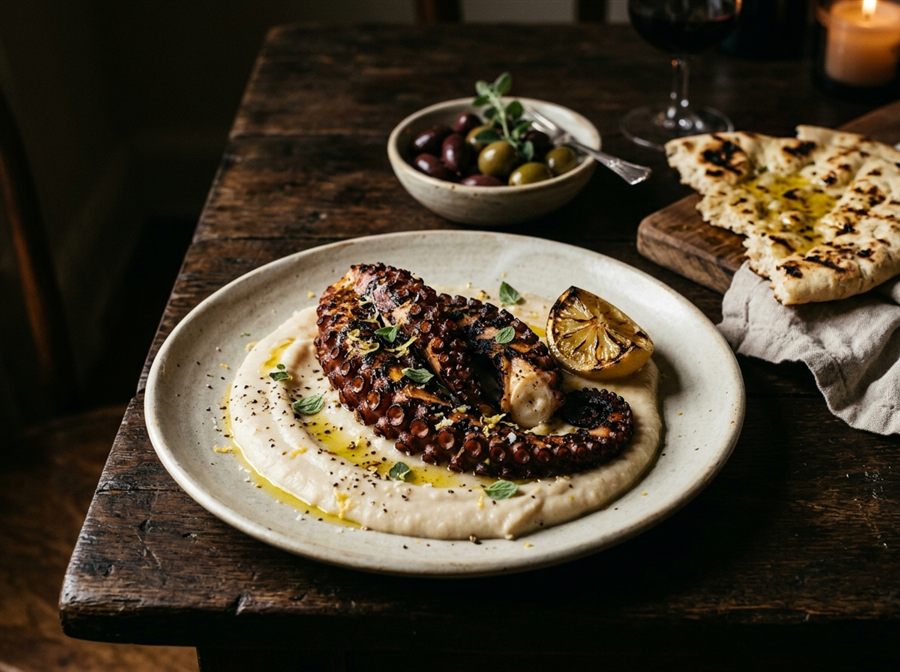
Mediterranean
Olive oil, lemon, char and herbs. Levantine spice against Greek and Italian plainness.
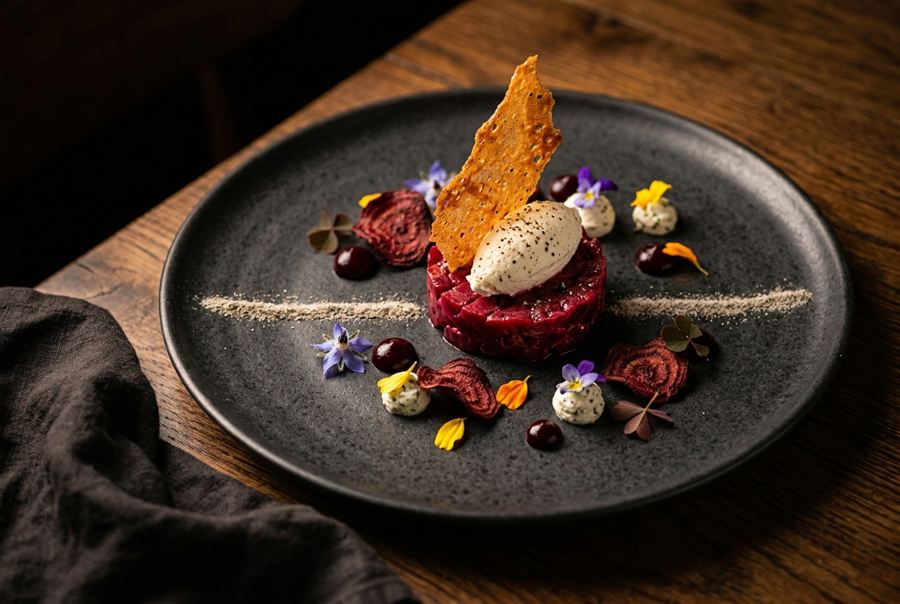
Gastronomy
Technique first. Ferments, smoke, temperature held to the degree, and a lot of work done days before anyone sits down.
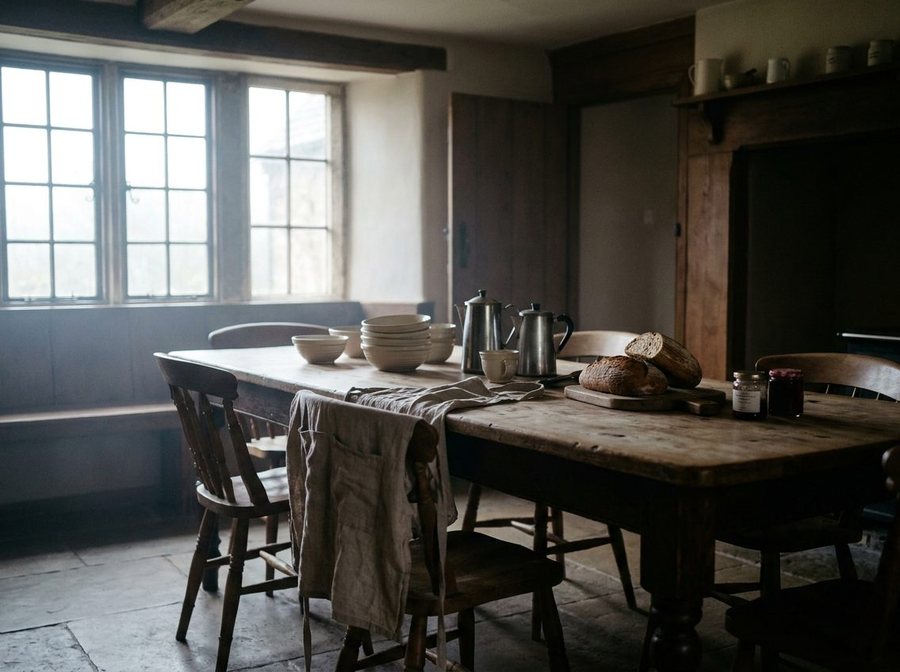
Resident Chef
A Sable chef takes over your kitchen for the length of the stay — two or three days, one team, first coffee to last plate.
Create your menu
Build the menu yourself, in two minutes.
Pick a menu, choose one dish per course, add your guests and the date. The price a head updates as you go, and the plan lands with us the moment you send it. Not sure yet? Send it half-done and we shortlist with you.
Create your menu Or just enquire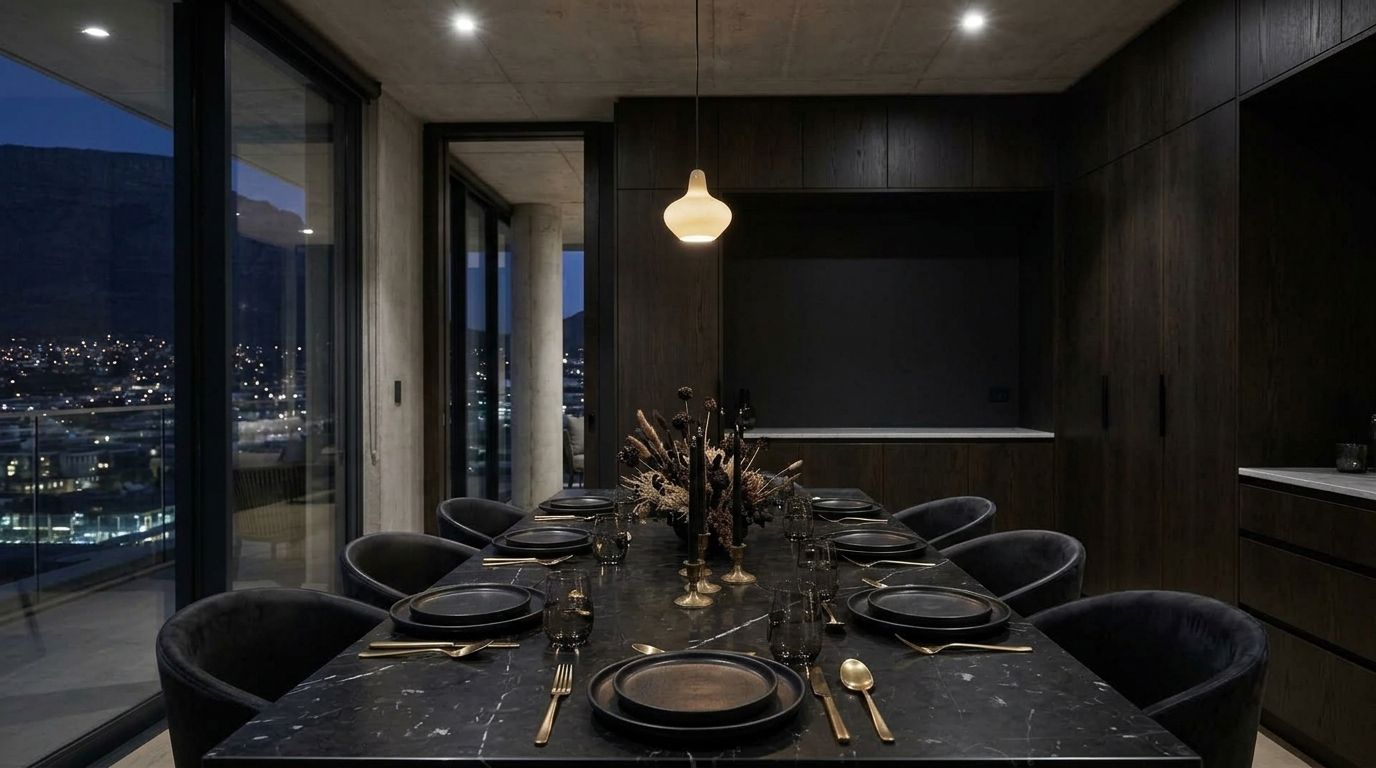
What comes with it
Everything except the table.
A private chef working alone arrives with a knife roll and borrows your pots. That is the difference here: there is a warehouse, a cold room and a supplier account standing behind the person in your kitchen.
Ask about a date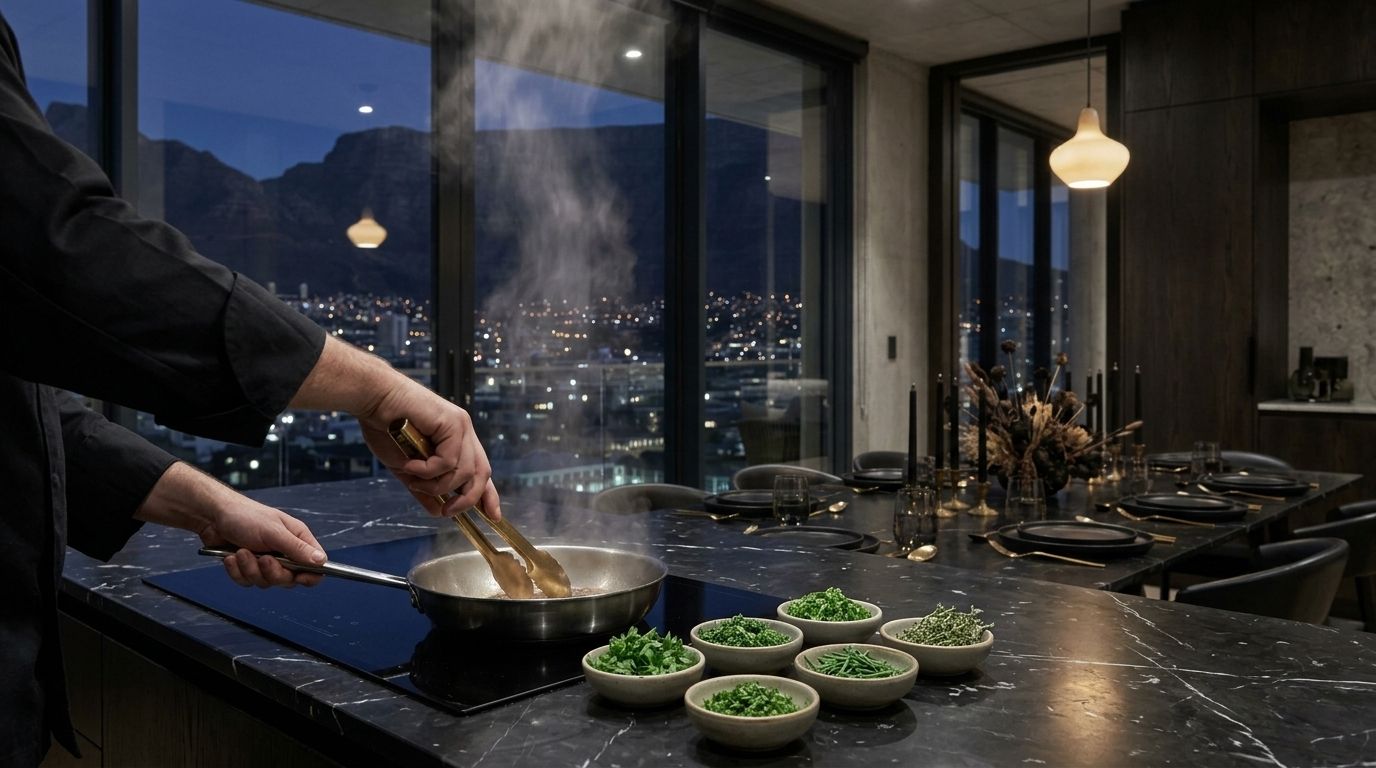
- The food — bought on our supplier accounts, prepped at Epping
- The equipment — pans, pots, boards, knives, plating kit, cold boxes
- A vetted chef — we have eaten their food, checked their references and cleared them for that menu
- Crew — a second pair of hands and service from twelve guests up
- A standby chef — named and reachable, for the night someone cannot make it
- Plates and cutlery — on request, if yours do not stretch to the number
- The clean-up — kitchen, dishes, and the crates back to us
- One invoice — a proper tax invoice from The Velvet Effect, not a cash job
Who books this
Small tables, mostly.
The room is the point. Up to forty-five people is where a chef can cook properly and still talk to everyone. Above that it stops being a meal at home and becomes catering, which The Velvet Effect also does, differently.
Questions
The things people actually ask.
What kind of kitchen do I need?
A working hob, a sink and somewhere to put things down. An oven helps and some menus want one, but not all of them do. Fridge space is the thing people underestimate. We arrive with cold food that has to stay cold until it is cooked, so we need shelves free. That is why the form asks about your hob, oven and fridge, and why we ask for photos.
Do my guests get a choice?
One dish per course. You pick one starter, one main and one dessert off your menu, and the whole table shares that menu — it is how a home kitchen sends every plate out hot and together, and it means we buy exactly what gets eaten. The canapés stay the chef’s choice, five of them, always. Vegetarians, vegans and anyone with an allergy are served their own version of the same dishes, counted in from the start — never handed a plate with something taken off it. Tapas is the one exception: eight tapas-sized plates shared by the table, three small plates always, and you choose whether the rest is three mains and two desserts or two mains and three desserts.
Are your chefs qualified?
Some hold formal qualifications and some do not, and we do not pretend otherwise. What every one of them has done is cook a trial for us, hand over their ID, pass a reference check with two people who employed them, and cook alongside one of our leads before running a table alone. We are vouching for their food because we have eaten it, not because of a certificate on a wall.
Do you bring equipment, or use mine?
We bring our own pans, pots, knives, boards, serving ware and plating kit. We use your hob, your oven, your sink and your counters. If something is missing we would rather find that out from a photo two weeks before than at half past six on the night.
Who cleans up?
We do. The team cleans as it goes, and the kitchen is left the way we found it. Dishes done, bins out, our crates packed and gone. You do not wash anything.
How do you handle allergies and dietaries?
The menu is built around them from the start. We do not cook one menu and then take things off a plate at the table, because that is how people get hurt. Tell us everything, including the mild ones and the strong dislikes. If we cannot cook around something safely in a home kitchen we will say so before you pay a cent.
How far do you travel?
Anywhere within 10 km of our kitchen in Epping is included — that covers most of the southern suburbs and the city bowl. Between 10 and 30 km there is a flat travel fee of R2,000, or R2,750 if the meal needs four or more of us. Between 30 and 50 km it is R2,750, or R3,500 for four or more. Further out — the winelands, a villa up the coast — is usually still a yes, quoted per job so you can see exactly what it costs.
How do I pay?
A proper tax invoice, always, with our VAT number and your address on it. A 50% deposit holds the date and the balance is due on the terms shown on the invoice. Pay by EFT using the banking details printed on it, or with a card through the payment link we send. Nothing is booked on a handshake.
How far ahead should I book?
About three weeks is comfortable. It gives us time to write a menu around your table and to hold a prep slot and a chef. Shorter notice is worth asking about, especially midweek. December is the exception and it fills early.
Enquire
Tell us about the meal.
Two minutes. A person reads every one of these, so there is no wrong way to fill it in. If you are not sure of something yet, pick "not sure" and say so in the message.
Got it. Thank you.
Your enquiry is in front of us. Someone reads it properly rather than sending you an automatic reply, so give us one working day.
Next: we will WhatsApp you on the number you gave to ask for the three kitchen photos, then come back with a menu written for your table and a quote with every line shown.
Back to the top